
Why Cannabis for Sleep: What the Research Really Shows

June 25, 2026

Why Cannabis for Sleep: What the Research Really Shows

Cannabis is defined as a plant-based remedy that reduces sleep onset latency by acting on the brain's cannabinoid receptors, making it one of the most widely used natural sleep aids in the United States. According to an American Academy of Sleep Medicine survey, one in three U.S. adults reports better sleep when using marijuana, with 3.7% using it daily or near-daily specifically for sleep. That is a significant share of the population self-medicating with a substance whose effects on sleep architecture are far more nuanced than most people realize. Understanding why cannabis for sleep works in some cases, and where it falls short, is the difference between using it wisely and getting trapped in a cycle you did not see coming.

Why cannabis for sleep is more complicated than it looks

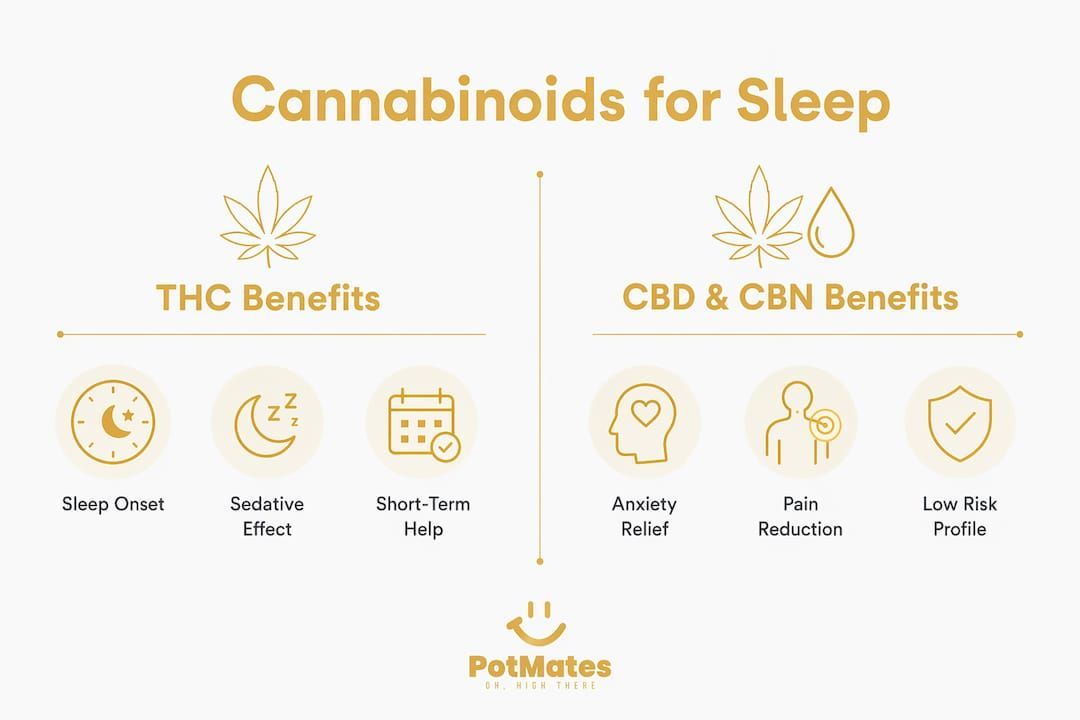
Cannabis promotes sleep primarily through THC, the compound that binds to CB1 receptors in the brain and produces sedation. THC shortens the time it takes to fall asleep by slowing neural activity and reducing alertness. CBD works differently. It does not sedate you directly. Instead, it reduces anxiety, which is one of the most common reasons people lie awake at night. That anxiolytic effect can make falling asleep easier without the heavy sedation THC produces.

CBN is the third cannabinoid worth knowing. It appears in aged cannabis as THC breaks down, and early research suggests it has mild sedative properties of its own. A systematic review on cannabinoid dosing found CBD effective for sleep at doses of 50–300 mg and CBN showing promise at 20–100 mg. THC-heavy formulas, by contrast, showed less consistent results and carried a higher risk of adverse effects over time.

Here is the part most people miss: subjective sleep improvements from cannabis often do not match what objective measurements show. Users consistently report better sleep than actigraphy data actually confirms. That gap matters because it means you might feel like you slept well when your sleep architecture tells a different story.

Pro Tip: If you are using cannabis for sleep and feel groggy or unrefreshed in the morning, that is a signal worth taking seriously. THC suppresses REM sleep, which is the stage responsible for memory consolidation and emotional regulation.

The key takeaway from the research is this: cannabinoid type, dose, and individual biology all determine whether cannabis helps or hurts your sleep. There is no one-size-fits-all answer, and effectiveness varies widely across users.

What are the real risks of using cannabis for sleep?

Regular cannabis use for sleep carries risks that build slowly and quietly. Tolerance is the first problem. THC tolerance develops fast, meaning you need progressively higher doses to get the same sedative effect. That escalation is not just inconvenient. It is the beginning of a dependency cycle.

Withdrawal is the second problem, and it hits harder than most people expect. Two-thirds of regular cannabis users report anxiety, irritability, restlessness, and significant sleep disruption when they stop using. Those withdrawal symptoms can last for weeks. The cruel irony is that the sleep disruption from withdrawal looks almost identical to the original insomnia that drove someone to cannabis in the first place.

Rebound insomnia from withdrawal can trap users in a cycle where sleep worsens when stopping cannabis, which then prompts resumed use and deepens the dependency.

Signs that your cannabis use has crossed from helpful to problematic include:

  • You cannot fall asleep without it, even after months of regular use
  • You need more product to get the same effect you started with
  • You experience vivid, disturbing dreams when you skip a night
  • You feel anxious or irritable on nights you do not use it
  • You have tried to stop and experienced worsening sleep for more than a week

Pro Tip: Track your dose over time. If you notice yourself consistently increasing the amount you use to fall asleep, that pattern is a clear signal to talk to a doctor before the cycle deepens.

Long-term daily use also increases nighttime wakefulness despite short-term improvements. That means the very problem you are trying to solve can get worse the longer you rely on cannabis as your primary sleep tool.

How does cannabis compare to other sleep treatments?

Cognitive Behavioral Therapy for Insomnia, known as CBT-I, is the first-line treatment for chronic insomnia according to sleep medicine experts. It outperforms both cannabis and prescription medications for long-term outcomes. CBT-I addresses the root causes of insomnia, including thought patterns, sleep hygiene, and conditioned arousal. Cannabis, by contrast, masks symptoms without fixing what is driving them.

That said, cannabis is not without clinical merit in the short term. A clinical trial comparing a Thai cannabis-based herbal medicine to lorazepam found the cannabis-based option non-inferior for short-term insomnia treatment with a comparable safety profile. That is meaningful. It suggests cannabis-based medicines can hold their own against benzodiazepines in the short run.

The comparison breaks down over time, though. Here is how the options stack up across key dimensions:

  1. CBT-I addresses root causes, produces durable results, and carries no dependency risk. It requires time and consistency but delivers the strongest long-term outcomes.
  2. CBD and CBN formulas reduce anxiety and promote relaxation without the dependency risks of THC. They work best as a short-term complement to behavioral changes, not as a standalone fix.
  3. THC-dominant products produce fast sedation but carry tolerance and withdrawal risks. They are most appropriate for short-term, situational use rather than nightly reliance.
  4. Prescription benzodiazepines like lorazepam work quickly but carry significant dependency and withdrawal risks similar to THC, making them equally unsuitable for long-term nightly use.

Pro Tip: Use cannabis as a bridge, not a destination. If you are struggling with chronic insomnia, pair any cannabis use with CBT-I techniques like sleep restriction and stimulus control for lasting results.

Practical guidance for using cannabis to sleep better

If you decide to try cannabis for sleep, the approach matters as much as the product. Start with the cannabinoid profile, not the strain name. A product labeled "indica" tells you less than knowing its CBD, THC, and CBN content.

Practical guidelines for safer use:

  • Start with CBD or CBN formulas. CBD at 50–300 mg and CBN at 20–100 mg show the most consistent sleep benefits with the lowest risk profile. Learn how CBD differs from THC before choosing a product.
  • Choose the right format. Tinctures and edibles produce longer-lasting effects than smoking or vaping, which makes them better suited for staying asleep rather than just falling asleep. Non-smoking options are worth exploring if you want sustained overnight effects.
  • Time your dose correctly. Edibles take 60–90 minutes to kick in. Take them well before your target bedtime, not right before you lie down.
  • Use it situationally, not nightly. Reserve cannabis for nights when sleep is genuinely difficult, not as a nightly ritual. This slows tolerance development significantly.
  • Know when to seek help. If you have been using cannabis for sleep for more than a few weeks and still struggle, talk to a sleep specialist. Chronic insomnia deserves a proper evaluation, not just a higher dose.

You can also read more about cannabis and long-term sleep effects to get a fuller picture before committing to a routine.

Key takeaways

Cannabis reduces sleep onset latency through THC's sedative action and CBD's anxiety-reducing effects, but long-term nightly use carries real dependency and withdrawal risks that often outweigh the short-term benefits.

What I actually think about cannabis for sleep

Cannabis is a tool, not a cure. I have seen too many people come in convinced they have finally solved their insomnia, only to realize six months later that they cannot sleep at all without it. That is not a sleep solution. That is a new problem wearing the old one's clothes.

What I find genuinely useful about cannabis for sleep is the anxiety angle. For people whose insomnia is driven by a racing mind, a well-dosed CBD or CBN product can break the cycle of lying awake and watching the clock. That is real value. But it works best when it is paired with actual behavioral changes, not used as a substitute for them.

The research on cannabis and anxiety reinforces this. The people who get the most out of cannabis for sleep are the ones who treat it as a short-term support while they work on the underlying drivers of their insomnia. The people who struggle most are the ones who skip that step entirely.

My honest recommendation: be honest with yourself about your pattern. If you are reaching for cannabis every single night and the dose keeps climbing, that is information. Use it.

— Hammond

Quality sleep products, delivered to your door

If you are ready to try cannabis for sleep, the format and cannabinoid profile you choose will shape your experience more than any strain name.

Potmatespdx carries a curated selection of sleep-supportive options including cannabis tinctures, edibles, and other non-smoking formats that are well-suited for nighttime use. Not sure where to start? The virtual budtender at Potmatespdx can walk you through product options based on your specific sleep concerns, preferred format, and experience level. Potmatespdx delivers across Portland and surrounding areas with speed and discretion, so getting the right product is straightforward. Browse the menu and schedule delivery on your schedule.

FAQ

Does cannabis actually help you fall asleep faster?

Yes. THC reduces sleep onset latency by acting on CB1 receptors in the brain, producing sedation that shortens the time it takes to fall asleep. CBD contributes indirectly by reducing anxiety, which is a common barrier to sleep onset.

What is the best cannabinoid for sleep?

CBD at 50–300 mg and CBN at 20–100 mg show the most consistent benefits with the lowest risk profile. THC produces faster sedation but carries higher risks of tolerance and withdrawal with regular use.

Can you become dependent on cannabis for sleep?

Yes. Two-thirds of regular cannabis users report withdrawal symptoms including sleep disruption and disturbing dreams when they stop. Rebound insomnia from withdrawal is a well-documented risk of nightly use.

Is cannabis better than prescription sleep aids?

Short-term, cannabis-based medicines have shown results comparable to benzodiazepines like lorazepam in clinical trials. Long-term, neither is the preferred option. CBT-I is the most effective treatment for chronic insomnia.

How do I use cannabis for sleep without building a tolerance?

Use cannabis situationally rather than nightly, start with the lowest effective dose, and prioritize CBD or CBN formulas over THC-dominant products. Pairing cannabis use with behavioral sleep strategies slows tolerance development significantly.

July 23, 2026
Discover what is a cannabis explainer guide. This essential resource clarifies cannabis basics, THC vs. CBD, and more for beginners.

July 16, 2026
Discover the hybrid cannabis advantages: balance, flexibility, and targeted effects. Perfect for adults seeking support without paranoia.

July 9, 2026
Learn how to store medical marijuana effectively. Control temperature, humidity, and light to keep your cannabis fresh and potent for longer.
July 2, 2026
Discover why choose Oregon cannabis for its unmatched quality, affordable prices, and rich culture. Experience the best in legal cannabis today!

June 25, 2026
Discover delicious examples of cannabis edibles, their effects, and tips for choosing the right ones. Savor the experience today!

June 18, 2026
Discover what is personalized cannabis and how it tailors products to your unique needs. Transform your cannabis experience in 2026.
June 11, 2026
Discover delicious examples of cannabis edibles, their effects, and tips for choosing the right ones. Savor the experience today!

June 4, 2026
Unlock savings with our cannabis rewards program guide! Earn points & discounts on every purchase and maximize your cannabis budget.
June 2, 2026
Unlock the full potential of your cannabis choices with our cannabis strain library guide. Understand terpenes and make informed selections!
June 2, 2026
Discover how to optimize home cannabis use for better results. Master dosing, product selection, and techniques for a relaxing experience!
Show More